National Seminar on Kadambini: Vrishti Vijnana

The Shri Shankar Shikshayatan Vedic Research Institute organised a two-day National Seminar titled “Kadambinī: Vṛishṭi-Vijnana Vimārsha (Discourse on the Science of Rainfall)” on 30–31 December 2025 (Tuesday–Wednesday) at the Vachaspati Auditorium, Shri Lal Bahadur Shastri Rashtriya Sanskrit University, New Delhi, from 10:00 a.m. to 5:00 p.m. Inaugural Session Presiding over the session, the Honourable Vice-Chancellor of Shri Lal Bahadur Shastri National Sanskrit University, Prof. Murli Manohar Pathak, expressed his wish that the two-day national seminar be successful and stated that the Kadambinī text is extremely beneficial for society. Water is essential for all of us, and rainfall is its primary source. This text provides a comprehensive explanation of the causes behind rainfall and the absence of rainfall. The fundamental cause of rainfall is the Sun. The Sun absorbs water from the Earth and it is the Sun itself that brings rain back to the Earth. As the Chief Guest, Shri Rajeshwar Shukla, Principal Judge, Family Court, Gorakhpur, stated that rainfall is essential for the preservation of life. From an environmental perspective, conserving water is the responsibility of all of us. Through this text, predicting rainfall becomes easier; hence, the book is worthy of study. Prof. Santosh Kumar Shukla, Institute of Sanskrit and Indological Studies, Jawaharlal Nehru University, New Delhi, while introducing the theme, said that the auspicious invocation of the text describes the deities responsible for rainfall. The four rain-bestowing deities are Vasavya, Sharmaṇya, Sapīti, and Marut. देवान् वसव्यान् शर्मण्यान् सपीतीन् मरुतोऽपि च । अभ्यर्थये वशे येषामेषा वृष्टिः प्रवर्तते ॥ कादम्बिनी पृष्ठ १, का. ६ “I beseech the Vasavya, Śarmaṇya, Sapīti, and Marut deities,under whose control this rainfall operates.”(Kadambinī, p. 1, v. 6) Second Session The session was chaired by Prof. Santosh Kumar Shukla. He explained that if at sunrise or sunset the Sun or Moon appears honey-coloured and strong winds blow, then excessive rainfall occurs. उदयेऽस्तमये वापि विवर्णोऽर्कोऽथवा शशी । मधुवर्णोऽतिवायुश्चेदतिवृष्टिर्भवेत्तदा ॥ वही, पृ. २१९, का.४२ “If at sunrise or sunset the Sun or Moon appears discoloured or honey-coloured,and strong winds prevail, then excessive rainfall occurs.”(ibid., p. 219, v. 42) Prof. Rāmrāj Upādhyāya, Department of Priesthood, Shri Lal Bahadur Shastri National Sanskrit University, stated that if the auspicious planets responsible for rainfall on the full-moon day of the bright fortnight of Āṣāḍha become afflicted, great inauspiciousness is feared—this is the author’s intent. गर्भाः पुष्टिकराः सर्वे सुयोगा विलयं गताः । आषाढ्यां तु विनष्टायां सर्वमेवाशुभं भवेत् ॥ वही, पृ. ८५, का.४१७ All the germinating conditions (germ-bearing clouds / rain-producing factors) that are nourishing and well-formed, having arisen from favourable combinations, are destroyed. When this destruction occurs in the month of Āshāḍha, everything turns inauspicious. Prof. Harish, Department of Sanskrit, Kirori Mal College, University of Delhi, stated that if during Mārgaśīrṣa, Pauṣa, and Māgha months the Sun and Moon appear dim due to frost, then beginning from the seventh day of the bright fortnight of Āṣāḍha, there will be abundant rainfall for thirteen days. तुषारमलिनौ ताम्रौ चन्द्रार्कौ मार्गतस्त्रये । आषाढशुक्लसप्तम्यारब्धे वृष्टिर्दिनत्रये ॥ तत्रैव पृष्ठम् २०, का. १९ When the Moon and the Sun, appearing copper-coloured and dimmed by frost or haze, are seen during the three path-months (Mārgaśīrṣa, Pauṣa, and Māgha), then rainfall occurs for three days, beginning from the seventh day of the bright fortnight of Āshāḍha. Dr. Dhananjay Mani Tripathi, Associate Professor, Jamia Millia Islamia, said that in the month of Pauṣa, based on the Moon’s motion, clouds conceive from Mūla to Bharaṇī nakṣatra, and based on the Sun’s motion, rainfall occurs from Ārdrā to Viśākhā. पौषेमूलाद् भरण्यन्तं चन्द्रचारेण गर्भति । आर्द्रादिभे विशाखान्ते सूर्यचारेण वर्षति ॥ वही, पृ. २४, का.४१ In the month of Pauṣa, from Mūla up to Bharaṇī (nakṣatras), the clouds conceive according to the movement of the Moon; and from Ārdrā up to Viśākhā (nakṣatras), they rain according to the movement of the Sun. Dr. Ratish Kumar Jha, Assistant Professor, Jyotiṣa Department, Madhubani, Bihar, stated that if on the first Tuesday of the bright fortnight of Āṣāḍha the sky is cloudless, without lightning or thunder, then excessive rainfall occurs for two months. आषाढे प्रथमे भौमे निरभ्रे यदि भास्करः।न विद्युद्गर्जितं तर्हि द्वौ मासौ स्यादवर्षणम् ॥ वही, पृ. ८०, का.३५७ If, in the month of Āṣhāḍha, on the first Tuesday, the Sun shines in a cloudless sky, and there is neither lightning nor thunder, then there will be no rainfall for two months. Dr. Mādhav Gopal, Assistant Professor, Aatmaram Sanatan Dharma College, Delhi, said that clouds in the western direction on Pratipadā, Saptamī, Dvādaśī, and Pūrṇimā of the bright fortnight of Bhādra cause good rainfall. प्रतिपत् सप्तमी भाद्रे द्वादशी च त्रयोदशी ।पूर्णिमा चासु वारुण्यां श्रितैर्मेघैः प्रवर्षणम् ॥ वही, पृ. ११४, का.५५२ In the month of Bhādra, on Pratipadā (1st), Saptamī (7th), Dvādaśī (12th), Trayodaśī (13th), and Pūrṇimā (Full Moon), if clouds gather in the western (Varuṇa) direction, then rainfall occurs abundantly. Dr. Manishankar Dwivedi, Guest Faculty, Jamia Millia Islamia, said that if in Phālguna the sky remains cloudy without rain, it indicates successful cloud conception, resulting in good rainfall during the monsoon. फाल्गुने नित्यमभ्रं स्यान्न तु पातयते जलम् ।गर्भदोहसम्पत्तिं विद्याद् वृष्टिः शुभा भवेत् ॥ वही, पृ. ३९, का.१२५ If in the month of Phālguna the sky remains continually clouded, yet does not release rain, this should be understood as the successful formation and nourishment of the cloud-embryo; as a result, the rainfall will be auspicious (in the coming season). Third Session Prof. Sundar Narayan Jha, Department of Veda, presiding over the session, stated that if during the month of Caitra the Sun is in Revatī nakṣatra and for thirteen days there are no clouds, wind, or lightning, then the cloud conception is considered fruitful. रेवत्या अर्कभोग्येषु त्रयोदशदिनेष्वपि ।यत्राभ्रं पवनो विद्युत् तत्र गर्भः शुभावहः ॥ वही, पृ. ४३, का.१५३ When the Sun is passing through Revatī nakṣatra, during those thirteen days, if there are clouds, wind, and lightning, then the cloud-embryo (rain potential) formed there is auspicious and fruitful Prof. Mahānanda Jha, Department of Nyāya, stated that if during Māgha month from Mūla to Bharaṇī nakṣatra there are lightning, thunder, clouds, and easterly or northerly winds, rainfall continues from…
Read More

राष्ट्रीय संगोष्ठी –कादम्बिनी वृष्टिविज्ञान विमर्श

प्रतिवेदन श्रीशंकर शिक्षायत वैदिक शोध संस्थान द्वारा ३०-३१ दिसम्बर २०२५, मंगलवार-बुधवार को श्री लाल बहादुरशास्त्री राष्ट्रीय संस्कृत विश्वविद्यालय, नई दिल्ली के वाचस्पति सभागार में कादम्बिनी : वृष्टिविज्ञान विमर्शनामक द्विदिवसीय राष्ट्रीय संगोष्ठी का समायोजन प्रातः १० वादन से सायंकाल ५ बजे तक किया गया । उद्घाटनसत्र इस सत्र में अध्यक्ष के रूप में विराजमान श्री लाल बहादुर शास्त्री राष्ट्रीय संस्कृत विश्वविद्यालय के माननीयकुलपतिप्रो. मुरली मनोहर पाठक ने कहा कि यह द्विदिवसीय राष्ट्रीय संगोष्ठी सफल हों एवं यह कादम्बिनी ग्रन्थसमाज के लिए अत्यन्त उपयोगी है। जल हम सभी के लिए अत्यन्त आवश्यक है। जल का मुख्य आधार वृष्टि हीहै। किस कारण से वृष्टि होती है और किस कारण से वृष्टि नहीं होती है, इसकी व्यापक व्याख्या इस ग्रन्थ मेंमिलती है। वृष्टि का मूलकारण सूर्य है। सूर्य ही पृथ्वी से जल का शोषण करता है और सूर्य ही पृथ्वी पर जल कीवृष्टि करता है। मुख्य अतिथि के रूप में श्रीराजेश्वर शुक्ल, प्रधान न्ययाधीश, पारिवारिक न्यायालय, गोरखपुर ने कहा कि प्राणीके जीवनरक्षा के लिए वृष्टि अत्यन्त आवश्यक है। पर्यावरण की दृष्टि से जल का संरक्षण करना हम सब कादायित्व है। इस ग्रन्थ के माध्यम से वृष्टि का अनुमान करना आसान होगा। इसीलिए यह ग्रन्थ पठनीय है।प्रो. सन्तोष कुमार शुक्ल, संस्कृत एवं प्राच्यविद्या अध्ययन संस्थान, जवाहरलाल नेहरू विश्वविद्यालय, नईदिल्ली ने विषयप्रवर्तन करते हुए कहा कि ग्रन्थ के मंगलाचरण में वृष्टिकारक देवताओं का निरूपण किया गयाहै। वसव्य नामक देवता, शर्मण्य नामक देवता, सपीति नामक देवता और मरुत् नामक देवता ये चारवृष्टिप्रदायक देवता हैं। देवान् वसव्यान् शर्मण्यान् सपीतीन् मरुतोऽपि च ।अभ्यर्थये वशे येषामेषा वृष्टिः प्रवर्तते ॥ कादम्बिनी पृष्ठ १, का. ६ द्वितीयसत्र इस सत्र की अध्यक्षता प्रो. सन्तोष कुमार शुक्ल, संस्कृत एवं प्राच्यविद्या अध्ययन संस्थान, जवाहरलाल नेहरूविश्वविद्यालय, नई दिल्ली ने की। उन्होंने कहा कि उदय काल में अथवा अस्त काल में सूर्य अथवा चन्द्रमाशहद के रंग के रूप में प्रतीति हो, एवं प्रचण्ड हवा चले तो अतिवृष्टि होती है। उदयेऽस्तमये वापि विवर्णोऽर्कोऽथवा शशी ।मधुवर्णोऽतिवायुश्चेदतिवृष्टिर्भवेत्तदा ॥ वही, पृ. २१९, का.४२ प्रो. रामराज उपाध्याय, आचार्य, पौरोहित्य विभाग, श्री लाल बहादुर शास्त्री राष्ट्रीय संस्कृत विश्वविद्यालय, नईदिल्ली ने कहा कि आषाढमास के शुक्लपक्ष की पूर्णिमा तिथि को वृष्टि करने वाले जितने शुभग्रह हैं यदि वेदोषयुक्त हो जाते हैं तब अशुभ की अत्यधिक आशंका रहती है, यह ग्रन्थकार का अभिप्राय है। गर्भाः पुष्टिकराः सर्वे सुयोगा विलयं गताः ।आषाढ्यां तु विनष्टायां सर्वमेवाशुभं भवेत् ॥ वही, पृ. ८५, का.४१७ प्रो. हरीश, आचार्या, संस्कृत विभाग, किरोड़ी मल महाविद्यालय, दिल्ली विश्वविद्यालय ने कही किमार्गशीर्षमास में, पौषमास में, माघमास में बर्फ के द्वारा सूर्य और चन्द्रमा यदि मलिन प्रतीति हो तो वृष्टि केसमय आषाढमास के शुक्लपक्ष के सप्तमी तिथि से तेरह दिन पर्यन्त सुवृष्टि होगी। तुषारमलिनौ ताम्रौ चन्द्रार्कौ मार्गतस्त्रये ।आषाढशुक्लसप्तम्यारब्धे वृष्टिर्दिनत्रये ॥ तत्रैव पृष्ठम् २०, का. १९ डॉ. धनञ्जय मणि त्रिपाठी, सह आचार्य, संस्कृत विभाग, जामिया मिलिया इस्लामिया, नई दिल्ली ने कहा किपौषमास में चन्द्रमा की गति के आधार पर मूलनक्षर से धरणीनक्षत्र तक मेघ का गर्भ रहता है। उस स्थिति मेंसूर्य की गति से आर्द्रानक्षत्र से विशाखानक्षत्र तक मेघ बरसता है। पौषेमूलाद् भरण्यन्तं चन्द्रचारेण गर्भति ।आर्द्रादिभे विशाखान्ते सूर्यचारेण वर्षति ॥ वही, पृ. २४, का.४१ डॉ. रतीश कुमार झा, सहायक आचार्य, ज्योतिष विभाग, डॉ. जगन्नाथ मिश्र संस्कृत महाविद्यालय, मधुवनी,बिहार ने कहा कि आषाढ शुक्ल पक्ष के प्रथम मंगलवार के दिन यदि आकाश मेघ रहित हो, बिजली और गर्जनासे रहित हो तो दो मास तक अतिवृष्टि होगी । आषाढे प्रथमे भौमे निरभ्रे यदि भास्करः।न विद्युद्गर्जितं तर्हि द्वौ मासौ स्यादवर्षणम् ॥ वही, पृ. ८०, का.३५७ डॉ. माधव गोपाल, सहायक आचार्य, संस्कृत विभाग, आत्माराम सनातन धर्म महाविद्यलय दिल्ली, ने कहा किभाद्रमास के शुक्लपक्ष के प्रतिपदा, सप्तमी, द्वादशी और पूर्णिमा के दिन पश्चिम में बादल के होने से अच्छी वृष्टिहोती है। प्रतिपत् सप्तमी भाद्रे द्वादशी च त्रयोदशी ।पूर्णिमा चासु वारुण्यां श्रितैर्मेघैः प्रवर्षणम् ॥ वही, पृ. ११४, का.५५२ डॉ. मणिशंकर द्विवेदी, अतिथि प्राध्यापक, संस्कृत विभाग, जामिया मिलिया इस्लामिया, नई दिल्ली ने कहा किफाल्गुन मास में हमेशा आकाश में मेघ रहता हो और जल न बरसे तो गर्भ सम्पन्न समझना चाहिए। इस सेवर्षाकाल में वृष्टि अच्छी होगी । फाल्गुने नित्यमभ्रं स्यान्न तु पातयते जलम् ।गर्भदोहसम्पत्तिं विद्याद् वृष्टिः शुभा भवेत् ॥ वही, पृ. ३९, का.१२५ तृतीयसत्र प्रो. सुन्दर नारायण झा, आचार्य, वेद विभाग, श्री लाल बहादुर शास्त्री राष्ट्रीय संस्कृत विश्वविद्यालय, नई दिल्लीने सत्राध्यक्ष के रूप में अपना व्याख्यान प्रस्तुत किया। उन्होंने कहा कि यदि चैत्रमास में रेवतीनक्षत्र पर सूर्य होऔर तेरह दिन तक न मेघ हो, न हवा हो और न विद्युत् हो तो इस योग के कारण मेघ का गर्भ फलप्रद समझनाचाहिए। रेवत्या अर्कभोग्येषु त्रयोदशदिनेष्वपि ।यत्राभ्रं पवनो विद्युत् तत्र गर्भः शुभावहः ॥ वही, पृ. ४३, का.१५३ प्रो. महानन्द झा, आचार्य, न्याय विभाग, श्री लाल बहादुर शास्त्री राष्ट्रीय संस्कृत विश्वविद्यालय, नई दिल्ली नेकहा कि माघ मास में मूल नक्षत्र से भरणी नक्षत तक बिजली, गर्जना, पूर्व और उत्तर की वायु और मेघ के होनेसे आर्द्रा पर सूर्य का निवास हो, विशाखा नक्षत्र पर जब सूर्य आते हैं, इतने समय तक वृष्टि होती है। पौषारब्धोडुसंदोहे मूलाद्ये भरणीपरे ।विद्युद्गर्जितवाताभ्रैरार्द्रार्कादिषु वृष्टयः॥ वही, पृ. ३२, का.८८ डॉ. कुलदीप कुमार, सहायक आचार्य, संस्कृत विभाग, हिमाचल प्रदेश केन्द्रीय विश्वविद्यालय, धर्मशाला ने कहाकि सूर्य अपने किरणों के द्वारा पृथ्वी से रस लेता है और अन्न के लिए एवं प्राणियों के लिए पृथ्वी पर फिर वहीसूर्य वर्षा करता है। सरित्समुद्रभूमिस्थास्थापः प्राणिसम्भवाः ।चतुःप्रकारा भगवानादत्ते सवितांशुभिः ॥ वही, पृ. ३, का.१२ डॉ प्रवेश व्यास, सहायक आचार्य, वास्तुशास्त्र विभाग, , श्री लाल बहादुर शास्त्री राष्ट्रीय संस्कृत विश्वविद्यालय,नई दिल्ली ने कहा कि ज्येष्ठ शुक्ल पक्ष में गर्जना होन् स्से म्घ का गर्भ नष्ट हो जाता है और मेघ के कड़कने सेवज्र सी आवाज होने से श्रावण और भाद्रपद में अनावृष्टि होती है। गर्जितं ज्यैष्ठशुक्ले तु गर्भनाशाय जायते।स्फूर्जथुश्चेत्तदा वृष्टिर्नास्ति श्रावणभाद्रयोः॥ वही, पृ. ६४, का.२६६ डॉ नवीन पाण्डेय, सहायक आचार्य, वास्तुशास्त्र विभाग, श्री लाल बहादुर शास्त्री राष्ट्रीय संस्कृत विश्वविद्यालय,नई दिल्ली ने कहा कि वैशाख मास के शुक्ल पक्ष में पञ्चमी तिथि को यदि मेघ गरजता है, और मेघ बरसता हैऔर पूरे दिन पूर्व दिशा वाली हवा चलती हो तो भाद्रमास में फसल महगी होगी । वैशाखे पञ्चमी शुक्ला यद् गर्जति वर्षति ।पूर्ववातो द्नं यावद् भाद्रे धान्यमहार्घता ॥ वही, पृ. ५७, का.२४९ डॉ निगम पाण्डेय, सहायक आचार्य, ज्योतिष विभाग, धर्म समाज संस्कृत महाविद्यालय, मुजफ्फरपुर, बिहार नेकहा कि मेष राशि पर शुक्र और राहु का साथ रहना दुर्भिक्ष का कारक है, मेष राशि पर ही सूर्य, मङ्गल, शनिऔर शुक्र…

Read More

National Seminar on Kadambini-Part XI

On Sunday, 30 November 2025, an online national seminar was organised by the Shri Shankar Shikshayatan Vedic Research Institute. The symposium was structured around various topics from the Prakīrṇādhikāra section of Kādambinī, a text authored by Pandit Madhusudan Ojha. Dr. Naveen Sharma, Assistant Professor, Department of Jyotiṣa, Maharshi Valmiki Sanskrit University, Kaithal (Haryana), said in his lecture: If Mars is in the seventh place from Rahu, Mercury in the fifth place from Mars, and the Moon in the fourth place from Mercury, then an earthquake occurs. This type of earthquake is related to Aindra (Indra-related) disturbances. The causal factors of earthquakes are Indra, Varuṇa, Vāyu, and Agni.During the first part of the day, Vāyu prevails; in the second part, Agni; in the third part, Indra; and in the fourth part, Varuṇa. These four form a cycle, and earthquakes are examined based on these four cycles. Dr. Vijay Kumar, Assistant Professor, Department of Vāstu, Maharshi Pāṇini Sanskrit and Vedic University, Ujjain, explained: Meteor showers, thunderous shocks, earthquakes, atmospheric burning, aerial formations, dust, eclipses, and great winds—these eight zones determine the results of earthquakes.Over four fortnights (two months), Vāyu’s influence prevails; over three fortnights (45 days), Agni prevails; Indra’s effect lasts for one week; and Varuṇa’s effect is immediate. Dr. Punita Gupta, Assistant Professor, Department of Jyotiṣa, Central Sanskrit University, Ranveer Campus, Jammu, said: The Sun absorbs water from the ocean through its rays and gives it to the clouds. Driven by the wind, the cloud releases rain according to time and place. To understand the science of rainfall, there are many forms of nimitta-shastra (omens or indicators). These are fourfold: earthly (parthiva), atmospheric (antariksha), celestial (divya), and mixed (mishra). Dr. Satya Swaroop Bajpeyi, Assistant Professor, Department of Jyotisha, Central Sanskrit University, Eklavya Campus, said: During the rainy season, if a question is asked about rainfall, and if the ascendant at the time of the query is in a water-sign, the lunar mansion (nakṣatra) is associated with Varuṇa, and the Moon or Venus is in a quadrant and aspected by benefic planets, then rain will occur soon. Prof. Santosh Kumar Shukla, Professor, School of Sanskrit and Indic Studies, Jawaharlal Nehru University, New Delhi, said: Earthquakes are of four kinds— Shri Karan Vashishtha, Research Scholar, Department of Sanskrit, Jamia Millia Islamia, recited the Vedic invocation melodiously. The programme was conducted by Dr. Laxmi Kant Vimal, Research Officer, Shri Shankar Shikshayatan Vedic Research Institute. Many professors, research scholars, and scholars interested in Sanskrit studies from various universities and colleges across different states participated enthusiastically and made the symposium successful.

Read More

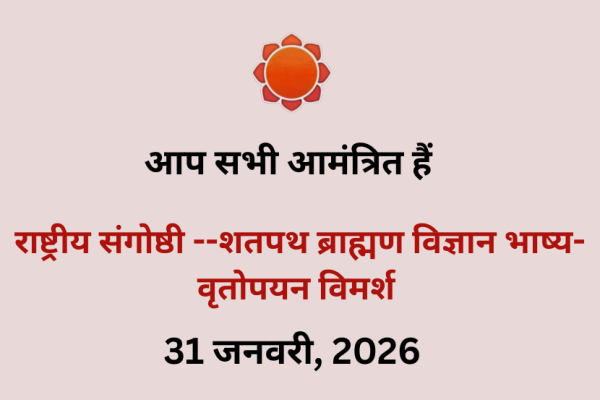
राष्ट्रीय संगोष्ठी–शतपथ ब्राह्मण श्रृंखला

हमें शतपथ ब्राह्मण पर चर्चाओं की सालाना श्रृंखला की घोषणा करते हुए खुशी हो रही है।   शतपथ ब्राह्मण में 100 अध्याय हैं । इस खंड में यजुर्वेद की व्यापक व्याख्या है । यजुर वेद, पारंपरिक शब्दों में, चार वेदों में से एक है । तत्त्व या सार के संदर्भ में, यह यजुर्वेद है । इसमें दो शब्द हैं-यथ और जू। ये प्राण , वायु , गति और वाक का उल्लेख करते हैं ।पंडित मोतीलाल शास्त्री की हिंदी में शतपथ ब्राह्मण की व्याख्या यजुर्वेद के विभिन्न पहलुओं में अंतर्दृष्टि प्रदान करती है ।इसे यहां पढ़ें–https://shankarshikshayatan.org/shatpatha-brahmana/ पहला सेमिनार 31 जनवरी, 2026 को ऑनलाइन हो रहा है। विषय है: वृत्तोपायन। आप सभी को सादर आमंत्रित किया जाता है।

Read More

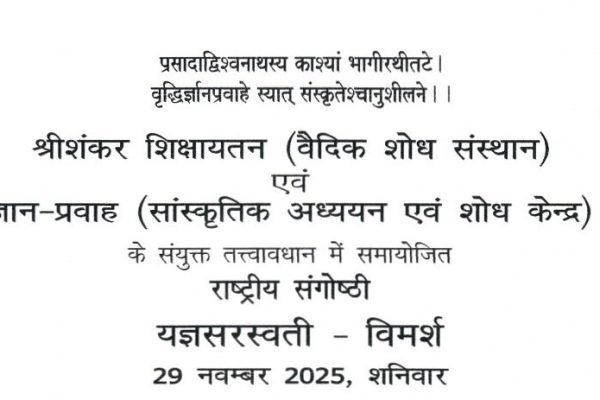
National Seminar on Yajnasaraswati

Report Under the joint auspices of Shri Shankar Shikshayatan Vedic Research Institute, New Delhi, and the Jnanapravah Centre for Cultural Studies and Research, Varanasi, a one-day National Seminar was organised on Saturday, 29 November 2025, in the auditorium of Gyanpravah at Kashi. In the inaugural session, Prof. Vijay Shankar Shukla, former Director of the Indira Gandhi National Centre for the Arts, Varanasi, presided over the programme. He stated that Yajñasarasvatī by Pandit Madhusudan Ojha is extremely significant from a yajña-centered perspective. In Vedic science, doctrines such as sat–asadvāda, rajovāda, and āvaraṇavāda occupy an important place in discussions on the process of creation. Prof. Sharadindu Tiwari, Professor, Department of Sanskrit, Faculty of Arts, Banaras Hindu University, Varanasi, delivered the keynote address as the Chief Guest. He observed that Shri Shankar Shikshayatan is continuously engaged, through such seminars, in the promotion and dissemination of Vedic science. The institution honours scholars through the Ṛṣi Samman, and its academic activities are worthy of high appreciation. Prof. Chandrakant Rai, former Professor, Arya Kanya P.G. College, Varanasi, stated in her inaugural address that the pañca-mahāyajñas constitute a social system that holds an important place in the Sanātana tradition. Through these yajñas, the social structure is strengthened. Prof. Shrikishor Mishra, former Head of the Faculty of Arts, Banaras Hindu University, Varanasi, welcomed the assembled guests. He remarked that Pandit Madhusudan Ojha’s Yajñasarasvatī is a work well worth reading, as it provides an excellent exposition of the yajña procedures of the Śukla Yajurveda. Representing Shri Shankar Shikshayatan, Dr. Lakshmikant Vimal, while introducing the theme, stated that brahma-vijñāna is of two kinds: veda-vijñāna and yajña-vijñāna. Veda-vijñāna deals with the contemplation of fundamental principles, whereas yajña-vijñāna concerns the contemplation of composite or integrative principles. In the valedictory session, Prof. Ramamurti Sharma, former Professor, Department of Sanskrit, Mahatma Gandhi Kashi Vidyapith, Varanasi, in his presidential address, stated that the cognition of a single principle is jñāna, whereas the cognition of multiple principles is vijñāna. Just as clay is knowledge, and all vessels made from clay constitute science. Prof. Gopal Prasad Sharma, Professor, Department of Veda, Shri Lal Bahadur Shastri National Sanskrit University, delivered his address as the Chief Guest, elucidating the importance of yajña. He stated that the meanings of Vedic words cannot be determined solely through grammar. Scholars from Banaras Hindu University, including Prof. Abhimanyu, Dr. Thakur Shivlochan Shandilya, and Dr. Raj Kishor Arya, along with many students of Sampurnanand Sanskrit University and various Sanskrit schools, participated in the seminar. Prof. Hanuman Mishra, Dr. Gangadhar Mishra, Dr. Pavan Kumar Pandey, and several other scholars presented their research papers. The seminar was conducted by Dr. Shilpa Singh of Banaras Hindu University.

Read More

राष्ट्रीय संगोष्ठी यज्ञसरस्वती विमर्श 

वाराणसी, २९ नवम्बर २०२५, शनिवार प्रतिवेदन  श्री शंकर शिक्षायतन वैदिक शोध संस्थान, नई दिल्ली एवं  ज्ञानप्रवाह सांस्कृतिक अध्ययन शोध केन्द्र, वाराणसी के संयुक्त तत्त्वावधान में दिनांक २९ नवम्बर २०२५, शनिवार को एक दिवसीय राष्ट्रीय संगोष्ठी का समायोजन काशी के ज्ञानप्रवाह के सभागार में किया गया। उद्घाटन सत्र में प्रो. विजय शंकर शुक्ल, पूर्व निदेशक, इन्दिरा गाँधी कला केन्द्र, वाराणसी कार्यक्रम के अध्यक्ष थे। उन्होंने कहा कि पण्डित मधुसूदन ओझाजी का यज्ञसरस्वती यज्ञीयदृष्टि से अत्यन्त महत्त्वपूर्ण है। वैदिक विज्ञान में सदसद्वाद, रजोवाद, आवरणवाद  आदि सिद्धान्त सृष्टिप्रक्रिया विमर्श में उल्लेखनीय स्थान रखता है।  प्रो. शरदिन्दु तिवारी, आचार्य, संस्कृत विभाग, कला संकाय, काशी हिन्दू विश्वविद्यालय, वाराणासी ने मुख्य अतिथि के रूप में अपना व्याख्यान दिया । उन्होंने कहा कि श्री शंकर शिक्षायतन संगोष्ठी के माध्यम से वैदिक विज्ञान के प्रचार और प्रसार में निरन्तर लगा हुआ है। ऋषिसम्मान से विद्वानों को सम्मानित करता है। शिक्षायतन की शैक्षणिक गतिविधि समादर के योग्य है। प्रो. चन्द्रकान्त राय, भूतपूर्व आचार्या, आर्य कन्या पी जी महाविद्यालय, वाराणसी ने अपने उद्घाटन वक्तव्य में कही कि पञ्चमहायज्ञ एक सामाजिक व्यवस्था है जो सनातन परम्परा में महत्त्वपूर्ण स्थान रखता है । इस यज्ञ के माध्यम से सामाजिक संरचना सुदृढ होता है। प्रो. श्रीकिशोर मिश्र, पूर्वसंकाय प्रमुख, कलासंकाय, काशी हिन्दू विश्वविद्यालय, वाराणसी ने समागत अतिथियों का स्वागत किया। उन्होंने कहा कि पण्डित मधुसूदन ओझा का यह यज्ञसरस्वती ग्रन्थ पठनीय है। शुक्लयजुर्वेद के यज्ञक्रम की उत्तम व्याख्या  यज्ञसरस्वती है। श्री शंकर शिक्षायतन के प्रतिनिधि डॉ. लक्ष्मीकान्त विमल ने विषयप्रवर्तन के क्रम में कहा कि ब्रह्मविज्ञान दो प्रकार के हैं। एक वेदविज्ञान दूसरा यज्ञविज्ञान । वेदविज्ञान से मौलिकतत्त्व का विचार होता है। यज्ञविज्ञान से यौगिकतत्त्व का विचार होता है। समापनसत्र में प्रो. राममूर्ति शर्मा, पूर्व आचार्य, संस्कृत विभाग, महात्मा गाँधी काशी विद्यापीठ, वाराणसी, ने अपने अध्यक्षीय उद्बोधन कहा कि  एक तत्त्व का बोध ज्ञान है और अनेक  तत्त्व का बोध  विज्ञान है।  जिस प्रकार मिट्टी ज्ञान है और मिट्टी  से बना हुआ सभी पात्र विज्ञान हैं। प्रो. गोपाल प्रसाद शर्मा, आचार्य, वेदविभाग, श्री लाल बाहादुर शास्त्रि राष्ट्रिय संस्कृत विश्वविद्यालय,  ने मुख्य अतिथि के रूप में यज्ञ के महत्त्व को उद्घाटित किया । उन्होंने कहा कि व्याकरण से वैदिकशब्दों का अर्थ नहीं किया जा सकता है। इस संगोष्ठे में काशी हिन्दू विश्वविद्यलय के  प्रो. अभिमन्यु, डॉ. ठाकुर शिवलोचन शाण्डिल्य,  डॉ. राज किशोर आर्य, संपूर्णानन्द संस्कृत विश्वविद्यलय के, संस्कृत पाठशाला के अनेक छात्रों ने भाग ग्रहण किया।  प्रो. हनुमान मिश्र, डॉ. गंगाधर मिश्र, डॉ. पवन कुमार पाण्डेय आदि अनेक विद्वांनों ने शोधपत्र का  वाचन किया । संगोष्ठी का संचालन काशी हिन्दू विश्वविद्यलय के डॉ. शिल्पा सिंह ने किया।

Read More

National Seminar on Yajnasarasvati

November 29, 2025. Shri Shankar Shikshayatan in collaboration with Janapravaha, Varanasi, is organising a National Seminar on Yajnasarasvati on November 29,2025 in Varanasi. राष्ट्रीय संगोष्ठी -यज्ञसरस्वती श्री शंकर शिक्षायतन जनप्रवाह, वाराणसी के सहयोग से 29 नवंबर 2025 को वाराणसी में यज्ञसरस्वती पर एक राष्ट्रीय संगोष्ठी का आयोजन कर रहा है।

Read More

National Seminar on Kadambini-Part X

Report A national seminar was organised by Shri Shankar Shikshayatan Vedic Research Institute on Friday, October 31, 2025, from 5:00 to 7:00 PM, through an online platform. The seminar was based on various topics discussed in the Prakīrṇādhikāra section of the work “Kādambinī” composed by Pandit Madhusudan Ojha. Prof. Amit Kumar Shukla, Ācārya, Department of Jyotiṣa, Sampurnanand Sanskrit University, Varanasi, delivering his address as the chief guest, said that —“In the month in which a row of stars shines with the luster of a bright and clear crystal gem, then in that month, clouds certainly bring good rainfall.” Vimala-sphaṭikābhāsā rocate tārakāvalī |Tatra māse subhikṣāya megho nūnaṁ pravarṣati ||(Kādambinī, p. 187, Kārikā 377) He further said that when a row of stars with a watery glow becomes visible for seven nights, it indicates good rainfall. The sighting of certain stars is the main indicator for predicting rainfall, and forecasting based on the color of the star is a major topic discussed in the text. The Kādambinī encompasses many such astronomical and meteorological themes. Saptarātraṁ jalādhārā bhāsate tārakāvalī |Tadāvaśyaṁ subhikṣāya meghas tatra pravarṣati ||(ibid., Kārikā 378) Dr. Pravesh Vyas, Assistant Professor, Department of Vāstuśāstra, Shri Lal Bahadur Shastri National Sanskrit University, New Delhi, stated in his address that this section of Kādambinī contains a detailed description of various comets (ketus). Among them, the comet named Sanvarta Ketu remains in transit for 1008 years and appears in the western direction during the evening, occupying three degrees of the sky. Saṁvartaḥ proṣya varṣāṇām aṣṭottara-sahasrakam |Paścime dṛśyate sāyam ākramya tryaṁśakaṁ divi ||(ibid., Kārikā 363) This comet, having a smoky or coppery hue, a pointed-shaft-like glow, and a rough tail, causes inauspicious effects for as many years as the number of muhūrtas it remains visible during the night. Dhūma-tāmra-āṇu-śūlābha-rūkṣa-cūḍaḥ sa yāvataḥ |Muhūrtān niśi dṛśyate tāvad varṣāṇy aniṣṭakṛt ||(ibid., Kārikā 364) Dr. Jyoti Prasad Dash, Assistant Professor, Department of Jyotiṣa, Central Sanskrit University, Sadashiva Campus, said that when the Vasā Ketu is very smooth in appearance, accompanied by good rainfall but also capable of bringing epidemics, it remains in the sky for 130 years, rising in the northern direction and stretching upward. Similar to it is the Asthi Ketu; if that comet appears rough, it leads to famine. A Śastra Ketu appearing in the western direction like the Vasā Ketu is a harbinger of epidemics. Vasāketur mahān snigdha-subhikṣa-marakapradaḥ |Triṁśad varṣa-śataṁ proṣya parod apy udagā yataḥ ||Vasāketuḥ samo rūkṣo ’sthi ketuḥ kṣud-bhayāvahaḥ |Prācyāṁ vasāsamo dṛṣṭaḥ śastra ketur mara-pradaḥ ||(ibid., Kārikās 350–351) Dr. Chandra Kant, Assistant Professor, Department of Jyotiṣa, Maharshi Valmiki Sanskrit University, Kaithal (Haryana), explained that the comets Audālaka Ketu and Śveta Ketu both have their front part directed southward and rise at midnight. The comet called Kā Ketu rises simultaneously in the east and west, having a dual form. Audālaka and Śveta Ketu appear bright and smooth for seven nights, and sometimes Kā Ketu is seen for a longer duration. When smooth and luminous, these bring auspicious results for ten years; when rough, they cause suffering through weapons or calamities. Audālakaḥ śveta ketur yāmyāgro ’rdha-niśodayaḥ |Prācyāṁ pratīcyāṁ yugapat ka-saṁjño ’nyo yugākṛtiḥ ||Snigdhāv ubhau sapta-rātraṁ dṛśyete kā ’dhikaṁ kvacit |Śubhado daśa-varṣāṇi rūkṣau śastra-dinārtidau ||(ibid., Kārikās 339–340) Prof. Santosh Kumar Shukla, Ācārya, School of Sanskrit and Indic Studies, Jawaharlal Nehru University, New Delhi, remarked that in this Prakīrṇādhikāra section, a comprehensive and systematic discussion on Ketu grahas (comets) has been undertaken. Sometimes in the sky, self-luminous bodies with diffused radiance appear — these are known as ketus (comets). Vikīrṇa-tejasaḥ kecit sva-prakāśamayā divi |Dṛśyante jātu cit piṇḍāpiṇḍās te ketavo matāḥ ||(ibid., Kārikā 296) Dr. Madhusudan Sharma, Guest Faculty, Department of Paurōhitya, Shri Lal Bahadur Shastri National Sanskrit University, New Delhi, recited a Vedic benedictory chant (maṅgalācharaṇa) melodiously. The program was conducted by Dr. Lakshmi Kant Vimal, Research Officer, Shri Shankar Shikshayatan Vedic Research Institute. Scholars, research students, and Sanskrit enthusiasts from various universities and colleges across different states actively participated, making the seminar a great success.

Read More

राष्ट्रीय संगोष्ठी-कादम्बिनी : प्रकीर्णाधिकार विमर्श (शृंखला-१०)

प्रतिवेदन श्रीशंकर शिक्षायतन वैदिक शोध संस्थान द्वारा दिनांक ३१ अक्टूबर, शुक्रवार २०२५ को सायंकाल ५-७ बजे तक अन्तर्जालीय माध्यम से राष्ट्रीय संगोष्ठी का समायोजन किया गया। पण्डित मधुसूदन ओझा प्रणीतकादम्बिनी नामक ग्रन्थ के प्रकीर्णाधिकार के विविध विषयों को आधार बना कर यह राष्ट्रीय संगोष्ठी समायोजितकी गई थी। प्रो. अमित कुमार शुक्ल, आचार्यः, ज्योतिष विभाग, संपूर्णानन्द संस्कृत विश्वविद्यालय, वाराणसी ने अपने मुख्यअतिथि के रूप में वक्तव्य देते हुए कहा कि जिस मास में चमकते हुए साफ स्फटिक मणि के समान आभा वालीतारा की पंक्ति चमकती हुई दिखाई दे तो उस मास में अच्छी वृष्टि के लिए मेघ आता ही आता है। विमल-स्फटिकाभासा रोचते तारकावली ।तत्र मासे सुभिक्षाय मेघो नूनं प्रवर्षति ॥ कादम्बिनी पृ. १८७, कारिका ३७७ सात रात तक जल की आभा वाली ताराओं की पंक्ति जब दिखाई देती है तो इससे अच्छी वृष्टि होती है। वृष्टि केलिए तारा का दर्शन प्रधान है और उस तारा के रंग के आधार पर वृष्टि की भविष्यवाणी करना एक बड़ा विषयहै। इस ग्रन्थ में अनेक ऐसे विषय समाहित हैं। सप्तरात्रं जलाधारा भासते तारकावली ।तदावश्यं सुभिक्षाय मेघस्तत्र प्रवर्षति ॥ वही, कारिका ३७८ डॉ. प्रवेश व्यास, सहायक आचार्य, वास्तुशास्त्र विभाग, श्री लाल बहादुर शास्त्री राष्ट्रीय संस्कृत विश्वविद्यालय,नई दिल्ली ने अपने वक्तव्य में कहा कि कादम्बिनी ग्रन्थ के इस प्रकरण में केतुओं का विस्तार से वर्णन हुआ है।इन केतुओं में संवर्तकेतु नाम वाला १००८ वर्ष तक प्रवास में रह कर पश्चिम दिशा में सायंकाल के समय आकाशके तीन अंशो का आक्रमण कर के दिखाई देता है। संवर्तः प्रोष्य वर्षाणाम् अष्टोत्तर-सहस्रकम् ।पश्चिमे दृश्यते सायम् आक्रम्य त्र्यंशकं दिवि ॥ वही, कारिका ३६३ धूम्र, तामवर्ण के शूल जैसी कान्ति वाला, रूखी शिखा वाला यह केतु भी रात्रि में जितने मुहूर्त तक दिखाई देताहै उतने ही वर्ष तक वह अनिष्ट करता है। ध्रूम-ताम्राणु-शूलाभ-रूक्ष-चूड़ः स यावतः ।मुहूर्तान्निशि दृश्यते तावद्वर्षाण्यनिष्टकृत् ॥ वही, कारिका ३६४ डॉ. ज्योति प्रसाद दाश, सहायक आचार्य, ज्योतिष विभाग, केन्द्रीय संस्कृत विश्वविद्यालय, सदाशिव परिसर, नेकहा कि यदि वसाकेतु अत्यन्त स्निग्ध हो, अच्छी वृष्टि वाला हो और महामारी को लाने वाला हो, तो वह १३०वर्ष तक प्रवासित रहता हुआ उत्तरदिशा की ओर लम्बा होता हुआ उदय करता है। वसाकेतु के समान अस्थिकेतुभी होता है। यदि वह अस्थिकेतु रूक्ष हो तो इस से भुखमरी होते है। पश्चिम दिशा में वसाकेतु की समानता कादीखा हुआ शस्त्रकेतु महामारी को लाता है। वसाकेतुर्महान् स्निग्ध-सुभिक्ष-मरकप्रदः।त्रिंशद्वर्षशतं प्रोष्य परोदप्युदगा यतः ॥ वही, कारिका ३५०वासाकेतुसमो रूक्षोऽस्थिकेतुः क्षुद्भयावहः।प्राच्यां वसासमो दृष्टः शस्त्रकेतुर्मरप्रदः ॥ वही, कारिका ३५१ डॉ. चन्द्र कान्त, सहायक आचार्य, ज्योतिष विभाग, महर्षि वाल्मिकि संस्कृत विश्वविद्यालय, कैथल, हरियाणा नेकहा कि औद्दालककेतु और श्वेतकेतु इन दोनों का अग्रभाग दक्षिण दिशा की ओर होता है और अर्धरात्रि में इनकाउदय होता है। ककेतु पूर्व दिशा और पश्चिम दिशा में एक साथ युगाकरा से उदय होता है। औद्दालक और श्वेतकेतुसात रात तक स्निग्ध दिखाई देते हैं। ककेतु कभी अधिक भी दिखता रहता है। वे दोनों स्निग्ध होने पर दस वर्षतक शुभ फल देते हैं और रूक्ष होने पर शस्त्र आदि से दुःख देते हैं। औद्दालकः श्वेतकेतुर्याम्याग्रोऽर्धनिशोदयः ।प्राच्याम् प्रतीच्यां युगपत् कसंज्ञोऽन्यो युगाकृतिः ॥स्निग्धावुभौ सप्तरात्रं दृश्येते काऽधिकं क्वचित् ।शुभदो दशवर्षाणि रूक्षौ शस्त्रदिनार्तिदौ ॥ वही, कारिका ३३९-३४० प्रो. सन्तोष कुमार शुक्ल, आचार्य, संस्कृत एवं प्राच्य विद्या अध्ययन संस्थान, जवाहरलाल नेहरू विश्वविद्यालय,नई दिल्ली ने कहा कि इस प्रकीर्णाधिकार में केतूग्रहों पर विशेष विचार व्यापक दृष्टि से किया गया है। कभीकभी आकाश में विकीर्ण तेज वाले स्वप्राकाशमय पिण्ड दोखाई दिया करते हैं, ये ही पिण्ड केतु कहलाते हैं। विकीर्णतेजसः केचित् स्वप्रकाशमया दिवि ।दृश्यन्ते जातुचित् पिण्डापिण्डास्ते केतवो मताः।। वही, कारिका २९६ डॉ. मधुसूदन शर्मा, अतिथि प्राध्यापक, पौरोहित्य विभाग, श्री लाल बहादुर शास्त्री राष्ट्रीय संस्कृतविश्वविद्यालय,नई दिल्ली ने सस्वर वैदिक मङ्गलाचरण का पाठ किया। कार्यक्रम का सञ्चालन श्रीशंकरशिक्षायतन वैदिक शोध संस्थान के शोध अधिकारी डॉ. लक्ष्मी कान्त विमल ने किया। इस कार्यक्रम में अनेकप्रान्तों के विश्वविद्याल और महाविद्याल के आचार्य, शोधछात्र, संस्कृत विद्या मे रुचि रखने वाले विद्वानों नेउत्साह पूर्वक भाग ग्रहण कर गोष्ठी को सफल बनाया।

Read More

National Seminar on Kadambini–Part XI

Shri Shankar Shikshayatan is organising the 11th discussion on Pandit Madhusudan Ojha’s magnum opus on meteorology, Kadambini on November 30, 2025. Chair: Professor Santosh Kumar Shukla, Jawaharlal Nehru University, Convener, Shri Shankar Shikshayatan. Speakers: Dr Satyaswarup Bajpayee, National Sanskrit University, Eklavya premises, Tripura.Dr Punita Gupta. National Sanskrit University, Ranvir premises, Jammu.Dr. Vijay Kumar, Maharshi Panini Sanskrit and Vedic University, Ujjain.Dr. Navin Sharma, Maharshi Valmiki Sanskrit University, Kaithal, Haryana.

Read More